

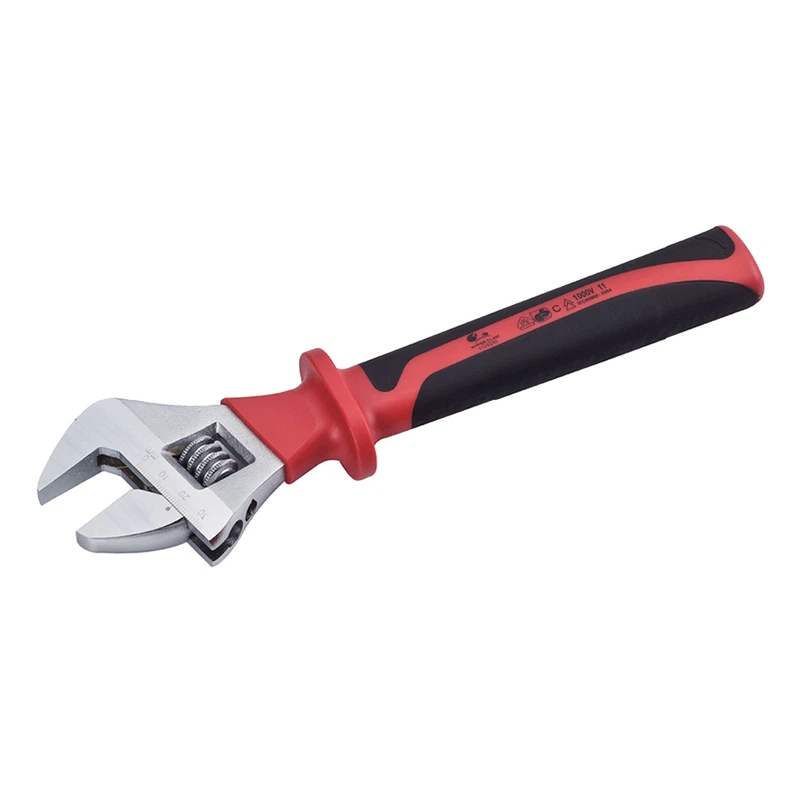
VDE insulated gear wrenches are essential tools in the electrical and industrial sectors, providing a safe and reliable means to work on live electrical systems. As a supplier of VDE Insulated Gear Wrenches, I am often asked about the materials used in their construction. In this blog post, I will delve into the specific materials that make up these high - quality wrenches, explaining their properties and how they contribute to the tool's performance and safety.
Metal Core Materials
The core of a VDE insulated gear wrench is typically made from high - grade steel. One of the most commonly used types is chrome - vanadium steel (Cr - V). Chrome - vanadium steel is renowned for its excellent strength and toughness. It can withstand high levels of torque without deforming or breaking, which is crucial when using a wrench to tighten or loosen nuts and bolts. The chromium in the steel provides corrosion resistance, protecting the tool from rust and degradation over time, even in harsh working environments. The vanadium enhances the steel's hardness and wear resistance, ensuring that the teeth of the gear mechanism remain sharp and functional after multiple uses.

Another option for the metal core is chrome - molybdenum steel (Cr - Mo). This type of steel offers similar benefits to Cr - V steel but with even greater strength and heat resistance. Cr - Mo steel is capable of withstanding higher temperatures without losing its mechanical properties, making it suitable for applications where the wrench may be exposed to heat, such as in some industrial manufacturing processes.
The choice between Cr - V and Cr - Mo steel depends on the specific requirements of the wrench. For general - purpose electrical work, Cr - V steel is often sufficient, providing a good balance between strength, durability, and cost. However, for more demanding applications, such as heavy - duty industrial maintenance or high - temperature environments, Cr - Mo steel may be the preferred material.
Insulation Materials
The insulation on VDE insulated gear wrenches is what sets them apart from regular wrenches and makes them suitable for working on live electrical systems. The insulation must meet strict safety standards set by the VDE (Verband der Elektrotechnik, Elektronik und Informationstechnik), which is a German association that certifies electrical safety.
One of the most common insulation materials used is PVC (Polyvinyl Chloride). PVC is a thermoplastic polymer that is known for its excellent electrical insulation properties. It has a high dielectric strength, which means it can withstand high voltages without conducting electricity. PVC is also relatively easy to process, allowing it to be molded into the complex shapes required for the wrench's insulation. It is resistant to abrasion, chemicals, and moisture, which helps to protect the insulation from damage during normal use.
Another insulation material that is gaining popularity is silicone rubber. Silicone rubber offers several advantages over PVC. It has a higher temperature resistance, which means it can maintain its insulation properties at elevated temperatures. This is particularly important in electrical work, as electrical components can generate heat during operation. Silicone rubber is also more flexible than PVC, providing a better grip and reducing the risk of the insulation cracking or peeling off during use. Additionally, silicone rubber is more resistant to ozone and ultraviolet radiation, which makes it suitable for outdoor applications.
The insulation on VDE insulated gear wrenches is typically applied in multiple layers. The first layer is often a base coat that adheres tightly to the metal core, providing a smooth surface for the subsequent layers. The outer layer is designed to provide additional protection against physical damage and environmental factors. The thickness of the insulation is carefully controlled to ensure that it meets the required safety standards. For example, VDE - certified wrenches are typically required to have a minimum insulation thickness of 1.5 mm for use on systems up to 1000 V AC or 1500 V DC.
Handle Materials
The handle of a VDE insulated gear wrench plays an important role in providing a comfortable and secure grip for the user. The handle material must be non - conductive to maintain the overall electrical safety of the tool.
One common handle material is a soft - grip thermoplastic elastomer (TPE). TPE is a blend of plastic and rubber, which combines the best properties of both materials. It has a soft, comfortable feel that reduces hand fatigue during extended use. TPE also provides a good grip, even when the user's hands are wet or oily. It is resistant to chemicals and abrasion, ensuring that the handle remains in good condition over time.
Some wrenches may also have a handle made from a hard - plastic material, such as ABS (Acrylonitrile Butadiene Styrene). ABS is a strong and rigid thermoplastic that provides a stable base for the handle. It can be molded into complex shapes, allowing for ergonomic designs that fit comfortably in the user's hand. ABS is also resistant to impact and has good dimensional stability, which means the handle will not deform easily under normal use.
Gear Mechanism Materials
The gear mechanism in a VDE insulated gear wrench is a critical component that allows for easy adjustment of the wrench's opening size. The gears are typically made from the same high - grade steel as the core of the wrench, such as Cr - V or Cr - Mo steel, to ensure strength and durability.
The teeth of the gears are precision - machined to provide a smooth and reliable operation. The surface of the gears may be treated with a special coating to reduce friction and wear. For example, a nitriding treatment can be applied to the gears, which creates a hard, wear - resistant surface layer. This treatment helps to extend the lifespan of the gear mechanism and ensures that the wrench can be adjusted accurately over time.
In addition to the gears themselves, the other components of the gear mechanism, such as the pawl and the ratchet, are also made from high - quality materials. These components must be able to withstand the forces exerted during use and operate smoothly to allow for easy adjustment of the wrench.
Conclusion
VDE insulated gear wrenches are made from a combination of high - quality materials that are carefully selected to provide the best performance and safety. The metal core provides strength and durability, while the insulation ensures electrical safety. The handle materials offer comfort and a secure grip, and the gear mechanism materials allow for easy adjustment.
As a supplier of VDE Insulated Gear Wrench, I am committed to providing products that meet the highest quality standards. Our wrenches are made from the finest materials and are rigorously tested to ensure compliance with VDE safety regulations.
If you are in the market for VDE insulated tools, we also offer VDE Insulated Adjustable Wrench and VDE Insulated Open Ended Spanners. These tools are also constructed with the same attention to detail and quality as our gear wrenches.
Whether you are an electrician, an industrial maintenance worker, or anyone who needs to work on live electrical systems, our VDE insulated gear wrenches are the ideal choice. If you are interested in purchasing our products or have any questions about our VDE insulated tools, please do not hesitate to contact us for a procurement discussion. We look forward to serving you and meeting your tooling needs.
References
- VDE Standards for Electrical Safety, Verband der Elektrotechnik, Elektronik und Informationstechnik
- Handbook of Materials Science and Engineering, various authors
- Technical Specifications of Chrome - Vanadium and Chrome - Molybdenum Steels, Steel Manufacturers' Associations