

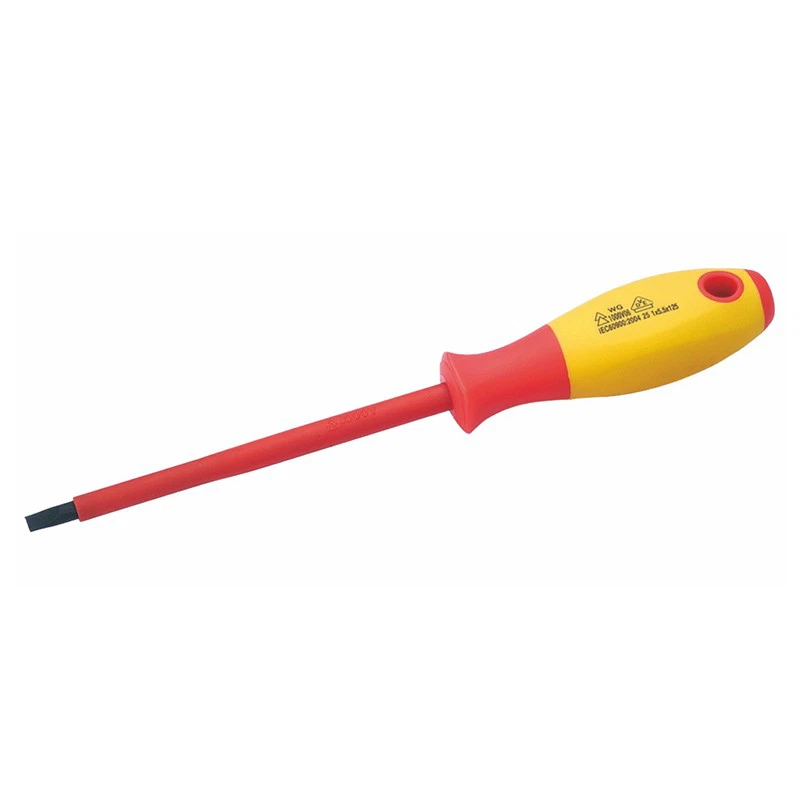
As a supplier of VDE Slotted Screwdrivers, I am often asked about the torque capacity of these essential tools. Torque capacity is a critical factor when it comes to using screwdrivers effectively and safely, especially in electrical and industrial applications where VDE (Verband der Elektrotechnik) certified tools are required. In this blog post, I will delve into what torque capacity means for VDE Slotted Screwdrivers, how it is determined, and why it matters in various work scenarios.

Understanding Torque Capacity
Torque is defined as the rotational force applied to an object. In the context of screwdrivers, torque capacity refers to the maximum amount of rotational force that a screwdriver can withstand or apply without suffering damage or losing its effectiveness. When you turn a screwdriver to drive a screw into a material, you are applying torque. If the torque exceeds the screwdriver's capacity, it can lead to a variety of issues, such as the screwdriver tip stripping, the shaft bending, or even the handle breaking.
For VDE Slotted Screwdrivers, which are designed for use in electrical work, maintaining the integrity of the tool is of utmost importance. These screwdrivers are insulated to protect the user from electrical shock, and any damage to the tool can compromise its safety features. Therefore, understanding and respecting the torque capacity of VDE Slotted Screwdrivers is crucial for both the longevity of the tool and the safety of the user.
Factors Affecting Torque Capacity
Several factors influence the torque capacity of VDE Slotted Screwdrivers. These include the material of the screwdriver, the design of the tip, and the overall construction of the tool.
- Material: The material used to make the screwdriver shaft plays a significant role in determining its torque capacity. High - quality VDE Slotted Screwdrivers are typically made from chrome - vanadium steel or similar high - strength alloys. These materials are known for their durability and ability to withstand high levels of stress without deforming. For example, chrome - vanadium steel has excellent hardness and toughness, which allows it to resist bending and breaking under torque.
- Tip Design: The shape and size of the screwdriver tip also affect its torque capacity. A well - designed tip that fits snugly into the screw slot will distribute the torque evenly, reducing the risk of stripping the screw or damaging the tip. VDE Slotted Screwdrivers often have precision - machined tips to ensure a proper fit and efficient transfer of torque.
- Construction: The overall construction of the screwdriver, including the handle and the connection between the handle and the shaft, can impact its torque capacity. A comfortable and ergonomic handle allows the user to apply force more effectively, while a strong and secure connection between the handle and the shaft ensures that the torque is transferred smoothly without any loss or weak points.
Determining Torque Capacity
Manufacturers of VDE Slotted Screwdrivers typically conduct rigorous testing to determine the torque capacity of their products. These tests involve applying increasing levels of torque to the screwdriver until it reaches its limit. The results of these tests are then used to specify the maximum torque capacity for each screwdriver model.
It's important to note that the torque capacity can vary depending on the size and type of the screwdriver. Smaller screwdrivers, such as those used for precision work, generally have a lower torque capacity compared to larger ones used for heavy - duty applications. When selecting a VDE Slotted Screwdriver, it's essential to choose one with a torque capacity that matches the requirements of the job.
Importance of Torque Capacity in Different Applications
The torque capacity of VDE Slotted Screwdrivers is critical in various applications, from electrical installations to industrial machinery maintenance.
- Electrical Installations: In electrical work, VDE Slotted Screwdrivers are used to tighten and loosen screws in electrical panels, switches, and outlets. Applying the correct amount of torque is essential to ensure a secure connection and prevent electrical arcing or loosening of the components over time. Using a screwdriver with insufficient torque capacity can result in loose connections, while exceeding the capacity can damage the screws or the electrical components.
- Industrial Machinery Maintenance: In industrial settings, VDE Slotted Screwdrivers are often used to perform maintenance on machinery. These machines may have high - torque requirements, and using a screwdriver with the appropriate torque capacity is necessary to ensure proper assembly and disassembly of components. Incorrect torque application can lead to machine malfunctions, downtime, and even safety hazards.
- Precision Work: For precision applications, such as electronics repair or watchmaking, the torque capacity of VDE Slotted Screwdrivers needs to be carefully controlled. These delicate tasks require a screwdriver that can apply a precise amount of torque without causing damage to the small components. Using a screwdriver with too high a torque capacity can easily strip the tiny screws or damage the sensitive parts.
Related VDE Screwdriver Products
In addition to VDE Slotted Screwdrivers, we also offer a range of other VDE - certified screwdrivers, including VDE Phillips Screwdrivers and VDE Precision Screwdrivers. Each type of screwdriver is designed with specific torque capacities and features to meet the diverse needs of our customers.
Choosing the Right VDE Slotted Screwdriver
When choosing a VDE Slotted Screwdriver, consider the following factors:
- Torque Requirements: Determine the torque requirements of the job you will be performing. If you are unsure, consult the manufacturer's specifications or seek advice from a professional.
- Size and Length: Choose a screwdriver with the appropriate size and length for the screws you will be working with. A longer screwdriver may provide more leverage, but it may also reduce the control over the torque.
- Quality and Certification: Ensure that the screwdriver is made from high - quality materials and is VDE certified. This certification ensures that the screwdriver meets the strict safety standards for electrical work.
Conclusion
The torque capacity of VDE Slotted Screwdrivers is a crucial factor that affects their performance, durability, and safety. By understanding the factors that influence torque capacity, choosing the right screwdriver for the job, and applying the correct amount of torque, you can ensure efficient and safe use of these tools.
If you are in the market for high - quality VDE Slotted Screwdrivers or other VDE - certified tools, we invite you to explore our product range. Our team of experts is ready to assist you in selecting the right tools for your specific needs. Whether you are an electrician, an industrial technician, or a hobbyist, we have the products and knowledge to support your work. Contact us today to discuss your requirements and start a procurement negotiation.
References
- ISO 60060 - 1:2010, High - voltage test techniques - Part 1: General definitions and test requirements
- IEC 60900:2016, Insulated hand - held tools for live working