

As a supplier of VDE Insulated T - handles, I understand the paramount importance of ensuring the insulation performance of these tools. VDE Insulated T - handles are widely used in electrical work, where reliable insulation can prevent electrical shocks and ensure the safety of workers. In this blog, I will share some effective methods to test the insulation performance of VDE Insulated T - handles.
Understanding the Basics of VDE Insulation
Before delving into the testing methods, it is essential to understand what VDE insulation means. VDE (Verband der Elektrotechnik) is a German organization that sets strict standards for electrical safety. VDE Insulated tools, including T - handles, are designed to provide a high level of protection against electrical hazards. These tools are typically made with insulating materials such as special plastics or rubber, which can withstand a certain level of electrical voltage without conducting electricity.
Visual Inspection
The first step in testing the insulation performance of a VDE Insulated T - handle is a visual inspection. This is a simple yet crucial step that can identify obvious signs of damage. Check the entire surface of the T - handle for any cracks, cuts, abrasions, or signs of wear. Even a small crack in the insulation can compromise its effectiveness. If any damage is found, the T - handle should not be used and should be replaced immediately.
Inspect the connection points between the metal parts and the insulation. Loose connections can also lead to insulation failure. Make sure that the insulation is firmly attached to the metal components of the T - handle, and there are no gaps or signs of separation.
Insulation Resistance Testing
Insulation resistance testing is a fundamental method to evaluate the insulation performance of VDE Insulated T - handles. This test measures the resistance of the insulation material to the flow of electric current. A high insulation resistance value indicates good insulation performance, while a low value may suggest insulation damage or degradation.
To perform an insulation resistance test, you will need an insulation resistance tester, also known as a megohmmeter. Here are the steps:
- Prepare the T - handle: Ensure that the T - handle is clean and dry. Any dirt, moisture, or contaminants on the surface can affect the test results.
- Set up the tester: Select the appropriate test voltage on the megohmmeter. The test voltage should be in accordance with the relevant standards. For VDE Insulated tools, a common test voltage is 1000V.
- Connect the tester: Connect the test leads of the megohmmeter to the metal part of the T - handle and the insulation surface. Make sure the connections are secure.
- Conduct the test: Turn on the megohmmeter and let it measure the insulation resistance for a specified period, usually 60 seconds. Record the measured value.
- Interpret the results: Compare the measured insulation resistance value with the specified minimum value in the VDE standards. If the measured value is lower than the minimum requirement, the T - handle may have insulation problems and should be further investigated or replaced.
Dielectric Strength Testing
Dielectric strength testing, also known as a high - voltage test, is another important test to assess the insulation performance of VDE Insulated T - handles. This test applies a high voltage to the T - handle for a short period to check if the insulation can withstand the voltage without breaking down.
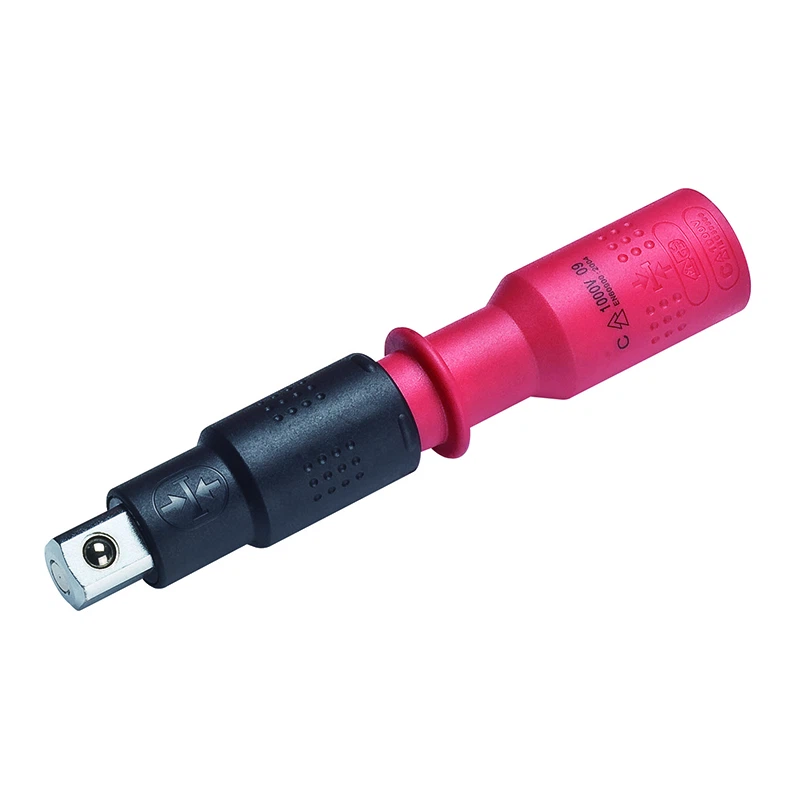

The dielectric strength test should be performed in a controlled environment by trained personnel using specialized high - voltage testing equipment. Here are the general steps:
- Prepare the test environment: Set up the test equipment in a well - ventilated and safe area. Ensure that all safety precautions are taken, such as using appropriate personal protective equipment.
- Mount the T - handle: Securely mount the T - handle in the test fixture, making sure that the metal parts are properly connected to the test electrodes.
- Apply the test voltage: Gradually increase the test voltage to the specified value in accordance with the VDE standards. The test voltage for VDE Insulated T - handles is typically much higher than the normal operating voltage, usually in the range of several thousand volts.
- Monitor the T - handle: During the test, monitor the T - handle for any signs of electrical breakdown, such as arcing, sparking, or smoke. If any breakdown occurs, the T - handle fails the test and should be discarded.
- Complete the test: After the specified test time has elapsed, gradually reduce the voltage to zero and disconnect the test equipment.
Comparative Testing
Comparative testing can also be a useful method to evaluate the insulation performance of VDE Insulated T - handles. This involves testing a new or known - good T - handle alongside the T - handle being tested. By comparing the test results of the two T - handles, you can quickly identify if there are any significant differences in insulation performance.
This method can be particularly useful when you suspect that a T - handle may have a problem but the test results are not conclusive. If the test results of the suspect T - handle are significantly different from the known - good one, further investigation may be required.
Regular Testing and Maintenance
To ensure the long - term reliability of VDE Insulated T - handles, regular testing and maintenance are essential. Establish a testing schedule based on the frequency of use and the working environment. For T - handles used in high - risk electrical work, more frequent testing may be necessary.
In addition to testing, proper maintenance of the T - handles is also important. Store the T - handles in a dry and clean environment, away from sources of heat, chemicals, and mechanical damage. Clean the T - handles regularly to remove any dirt or contaminants that may affect the insulation performance.
Related Products
If you are interested in other VDE Insulated tools, we also offer VDE Insulated Extensions, VDE Insulated Ratchets, and Insulated Drive Adapters. These products are also designed to meet the high - quality standards of VDE insulation, providing reliable protection in electrical work.
Conclusion
Testing the insulation performance of VDE Insulated T - handles is a critical process to ensure the safety of electrical workers. By following the methods described in this blog, including visual inspection, insulation resistance testing, dielectric strength testing, and comparative testing, you can effectively evaluate the insulation performance of these tools. Regular testing and maintenance are also essential to maintain the long - term reliability of the T - handles.
If you are in the market for high - quality VDE Insulated T - handles or other related tools, we are here to provide you with top - notch products. We are committed to ensuring the safety and performance of our products through rigorous testing and quality control. Contact us to discuss your procurement needs and let us help you find the best solutions for your electrical work.
References
- VDE Standards for Electrical Insulated Tools
- Electrical Safety Handbook for Insulated Tools