

As a supplier of VDE Insulated Gear Wrenches, I am often asked about the inner workings of these essential tools. In this blog post, I will delve into the gear mechanism of a VDE Insulated Gear Wrench, explaining how it functions and why it is a crucial component for various applications.
The Basics of a VDE Insulated Gear Wrench
Before we dive into the gear mechanism, let's first understand what a VDE Insulated Gear Wrench is and its primary purpose. VDE (Verband der Elektrotechnik) is a German organization that sets safety standards for electrical equipment. VDE Insulated Gear Wrenches are designed to provide a high level of electrical insulation, making them suitable for use in electrical work environments where there is a risk of electric shock.
These wrenches are commonly used for tightening or loosening nuts and bolts in electrical installations, machinery maintenance, and other applications where precision and safety are paramount. The gear mechanism in a VDE Insulated Gear Wrench plays a vital role in providing the necessary torque and control to perform these tasks effectively.
The Gear Mechanism: How It Works
The gear mechanism in a VDE Insulated Gear Wrench consists of several key components, including gears, a ratchet mechanism, and a handle. Let's take a closer look at each of these components and how they work together to enable the wrench to function.
Gears
The gears are the heart of the gear mechanism in a VDE Insulated Gear Wrench. They are typically made of high-quality steel or other durable materials and are designed to provide a smooth and efficient transfer of torque from the handle to the jaws of the wrench.
There are two main types of gears used in VDE Insulated Gear Wrenches: spur gears and helical gears. Spur gears are the most common type and are characterized by their straight teeth. They are simple in design and provide a high level of efficiency, making them suitable for most applications. Helical gears, on the other hand, have angled teeth and are designed to provide a smoother and quieter operation. They are often used in high-performance wrenches where precision and reduced noise are important.
The gears in a VDE Insulated Gear Wrench are arranged in a specific configuration to provide the desired gear ratio. The gear ratio determines the amount of torque that can be applied to the jaws of the wrench and the number of turns required to achieve a full rotation. A higher gear ratio means more torque can be applied, but it also requires more turns of the handle to achieve a full rotation.
Ratchet Mechanism
The ratchet mechanism is another important component of the gear mechanism in a VDE Insulated Gear Wrench. It allows the wrench to be used in a ratcheting motion, which means that the jaws of the wrench can be turned in one direction while the handle is moved back and forth in the opposite direction. This makes it easier and more efficient to tighten or loosen nuts and bolts, especially in tight spaces.
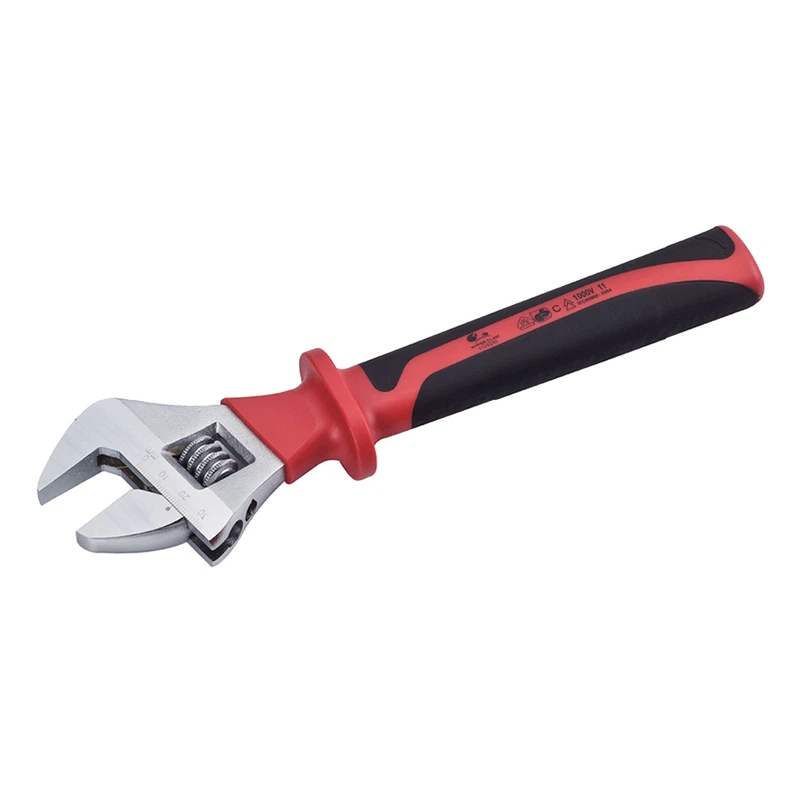

The ratchet mechanism consists of a pawl and a ratchet wheel. The pawl is a small, spring-loaded lever that engages with the teeth of the ratchet wheel. When the handle of the wrench is turned in one direction, the pawl engages with the teeth of the ratchet wheel, allowing the jaws of the wrench to turn. When the handle is moved back in the opposite direction, the pawl disengages from the teeth of the ratchet wheel, allowing the handle to be moved back without affecting the position of the jaws.
Some VDE Insulated Gear Wrenches also feature a reversible ratchet mechanism, which allows the direction of the ratcheting motion to be changed. This is useful when working in different orientations or when it is necessary to loosen a nut or bolt that has been tightened in a specific direction.
Handle
The handle is the part of the VDE Insulated Gear Wrench that is held by the user. It is typically made of a comfortable and durable material, such as rubber or plastic, and is designed to provide a good grip and control.
The handle of a VDE Insulated Gear Wrench is connected to the gears and the ratchet mechanism through a shaft. When the user applies force to the handle, the shaft rotates, which in turn rotates the gears and the ratchet mechanism. This causes the jaws of the wrench to turn, allowing the user to tighten or loosen nuts and bolts.
Advantages of the Gear Mechanism in a VDE Insulated Gear Wrench
The gear mechanism in a VDE Insulated Gear Wrench offers several advantages over other types of wrenches. Some of the key advantages include:
High Torque
The gear mechanism in a VDE Insulated Gear Wrench allows for a high level of torque to be applied to the jaws of the wrench. This makes it suitable for use in applications where a large amount of force is required to tighten or loosen nuts and bolts.
Precision
The gear mechanism in a VDE Insulated Gear Wrench provides a high level of precision, allowing the user to control the amount of torque applied to the jaws of the wrench. This is important in applications where over-tightening or under-tightening can cause damage to the equipment or result in a safety hazard.
Efficiency
The ratchet mechanism in a VDE Insulated Gear Wrench allows for a more efficient operation, as the user can turn the handle back and forth without having to remove the wrench from the nut or bolt. This saves time and effort, especially when working in tight spaces.
Safety
VDE Insulated Gear Wrenches are designed to provide a high level of electrical insulation, making them safe to use in electrical work environments. The gear mechanism in these wrenches is also designed to be reliable and durable, reducing the risk of failure or malfunction.
Applications of VDE Insulated Gear Wrenches
VDE Insulated Gear Wrenches are used in a wide range of applications, including:
Electrical Installations
VDE Insulated Gear Wrenches are commonly used in electrical installations to tighten or loosen nuts and bolts on electrical components, such as switches, outlets, and circuit breakers. The high level of electrical insulation provided by these wrenches makes them safe to use in live electrical circuits.
Machinery Maintenance
VDE Insulated Gear Wrenches are also used in machinery maintenance to tighten or loosen nuts and bolts on machinery components, such as engines, motors, and pumps. The high torque and precision provided by these wrenches make them suitable for use in a variety of machinery applications.
Automotive Repair
VDE Insulated Gear Wrenches are sometimes used in automotive repair to tighten or loosen nuts and bolts on automotive components, such as engines, transmissions, and brakes. The high level of durability and reliability provided by these wrenches makes them suitable for use in the demanding environment of automotive repair.
Other VDE Insulated Tools
In addition to VDE Insulated Gear Wrenches, we also offer a range of other VDE Insulated Tools, including VDE Insulated Offset Ring Spanners and VDE Insulated Adjustable Wrench. These tools are designed to provide the same high level of electrical insulation and performance as our VDE Insulated Gear Wrenches, making them suitable for use in a variety of electrical and mechanical applications.
Conclusion
The gear mechanism in a VDE Insulated Gear Wrench is a complex and sophisticated system that plays a crucial role in providing the necessary torque and control to perform a variety of tasks. By understanding how the gear mechanism works and the advantages it offers, you can make an informed decision when choosing a VDE Insulated Gear Wrench for your specific application.
If you are interested in learning more about our VDE Insulated Gear Wrenches or other VDE Insulated Tools, please visit our website at VDE Insulated Gear Wrench. Our team of experts is always available to answer your questions and help you find the right tool for your needs. We look forward to hearing from you and discussing your procurement requirements.
References
- "VDE Insulation Standards for Electrical Tools." VDE, [Year of Publication].
- "Gear Mechanisms in Hand Tools." Handbook of Mechanical Engineering, [Year of Publication].
- "Ratchet Mechanisms: Design and Applications." Journal of Mechanical Design, [Year of Publication].