

In industrial and electrical work, VDE spanners are essential tools, known for their insulation and safety features. However, many users are concerned about how these spanners perform in high - temperature environments. As a VDE spanners supplier, I have in - depth knowledge of these tools and their performance under various conditions. In this blog, I will explore how VDE spanners perform in high - temperature environments based on scientific research and practical experience.
Material Composition of VDE Spanners
VDE spanners are typically made of high - quality steel for the tool body, which provides the necessary strength and durability. The insulation layer is a key feature, usually made of special insulating materials such as rubber or plastic polymers. These materials are carefully selected to meet the VDE (Verband der Elektrotechnik) standards, which ensure a high level of electrical insulation and safety.
When exposed to high - temperature environments, the steel body of the VDE spanner may experience some changes. Steel expands when heated, and the coefficient of thermal expansion for steel is well - documented. For example, carbon steel has a coefficient of thermal expansion of approximately 11 - 13×10⁻⁶ /°C. This means that as the temperature rises, the dimensions of the spanner body will increase slightly. While this expansion is usually small in normal high - temperature working conditions, it can potentially affect the fit of the spanner on the nut or bolt. If the expansion is significant, the spanner may become loose or too tight on the fastener, reducing its effectiveness.
The insulation layer is also affected by high temperatures. Rubber - based insulation materials can start to degrade when exposed to high heat. At elevated temperatures, the rubber may lose its elasticity, become brittle, and develop cracks. Plastic polymers used in insulation may also experience softening or melting at high temperatures. For instance, some common plastics have a melting point in the range of 100 - 250°C. If the temperature in the working environment exceeds the tolerance of the insulation material, the electrical insulation properties of the VDE spanner will be compromised, posing a serious safety risk.
Impact on Insulation Resistance
Insulation resistance is a critical parameter for VDE spanners, as it determines their ability to protect the user from electrical shock. High - temperature environments can have a significant impact on the insulation resistance of these tools.
As the temperature increases, the mobility of ions and electrons in the insulation material increases. This leads to a decrease in the insulation resistance. According to the Arrhenius equation, the conductivity of a material is exponentially related to temperature. For insulation materials, this means that as the temperature rises, the insulation resistance decreases exponentially. In practical terms, a small increase in temperature can cause a large drop in insulation resistance.
For example, a VDE spanner with an insulation resistance of 10⁹ ohms at room temperature (20°C) may see its insulation resistance drop to 10⁷ ohms or even lower at a high temperature of 80°C. This reduction in insulation resistance can be dangerous, as it means that there is a higher chance of electrical current passing through the insulation layer, potentially reaching the user.

Impact on Mechanical Performance
In addition to the changes in insulation properties, high - temperature environments can also affect the mechanical performance of VDE spanners.
The hardness of the steel body of the spanner may change at high temperatures. As the temperature rises, the steel may undergo a process called annealing, which softens the metal. Annealing occurs when the steel is heated to a certain temperature range and then slowly cooled. In a high - temperature working environment, if the spanner is exposed to temperatures close to the annealing temperature of the steel (usually around 700 - 900°C for carbon steel), its hardness will decrease. This can lead to the spanner being more prone to deformation and wear. For example, the jaws of the spanner may become more easily damaged when applying torque to a fastener, reducing the spanner's ability to grip the nut or bolt effectively.
The lubrication inside the spanner, if any, can also be affected by high temperatures. Lubricants are used to reduce friction between moving parts in some types of VDE spanners, such as adjustable wrenches. At high temperatures, the lubricant may thin out or even evaporate. This can increase the friction between the parts, making the spanner more difficult to operate. For instance, an adjustable wrench may become stiff and hard to adjust when the lubricant has been affected by high heat.
Testing and Certification in High - Temperature Conditions
To ensure the safety and performance of VDE spanners in high - temperature environments, manufacturers conduct various tests. These tests simulate the actual working conditions that the spanners may encounter.
One common test is the high - temperature insulation resistance test. In this test, the spanner is placed in a temperature - controlled chamber, and its insulation resistance is measured at different temperatures. The spanner must meet the VDE standards for insulation resistance at each temperature point. For example, the VDE standard may require a minimum insulation resistance of 10⁸ ohms at a temperature of 60°C.
Another test is the mechanical performance test at high temperatures. The spanner is subjected to a series of torque applications at different temperatures to evaluate its ability to grip and turn fasteners. The jaws of the spanner are inspected for any signs of deformation or wear after the test.
Certification bodies also play an important role in ensuring the quality of VDE spanners in high - temperature conditions. They review the test results and issue certifications only to those spanners that meet the required standards. When purchasing VDE spanners for high - temperature work, it is essential to look for products that have been certified by recognized bodies.
Our VDE Spanners for High - Temperature Environments
As a VDE spanners supplier, we are aware of the challenges that these tools face in high - temperature environments. We offer a range of products designed to perform well under such conditions.
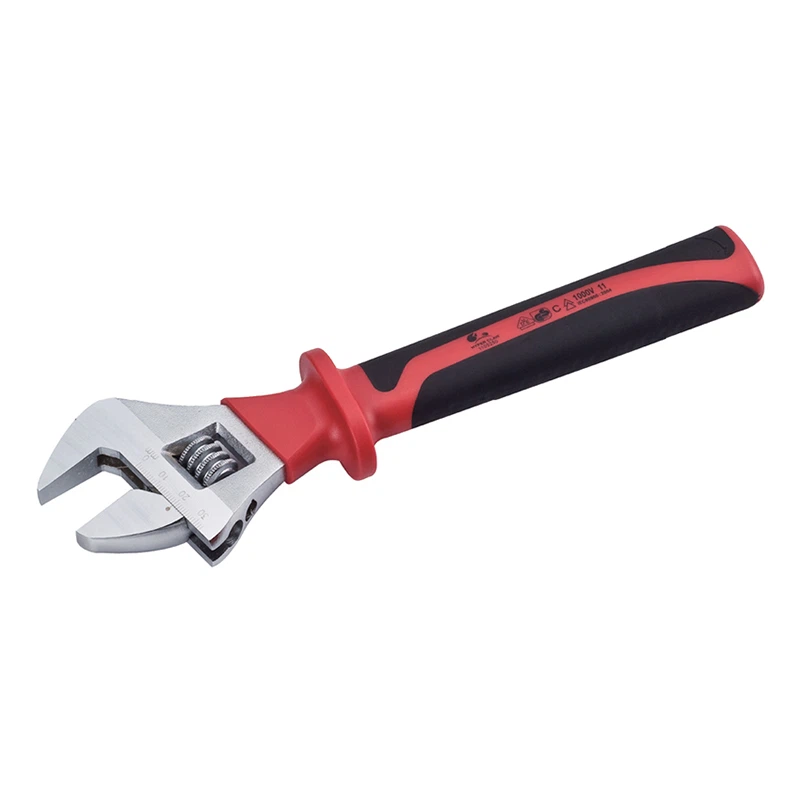
Our VDE Insulated Adjustable Wrench is made with high - quality steel that has a low coefficient of thermal expansion. This ensures that the dimensions of the spanner remain stable even at high temperatures, providing a good fit on fasteners. The insulation layer is made of a special high - temperature - resistant rubber compound that can withstand temperatures up to 120°C without significant degradation. This maintains the electrical insulation properties of the spanner, keeping the user safe.
Our VDE Insulated Offset Ring Spanners are also designed for high - temperature use. The steel body is heat - treated to improve its hardness and resistance to annealing. The insulation layer is carefully engineered to provide consistent insulation resistance even at elevated temperatures. These spanners are ideal for use in electrical work where high temperatures are present.
In addition, our VDE Insulated Gear Wrench features a unique design that reduces the impact of high temperatures on its mechanical performance. The gear mechanism is lubricated with a high - temperature - resistant lubricant that maintains its viscosity and lubricating properties at high temperatures. This ensures smooth operation of the wrench even in hot environments.
Conclusion and Call to Action
In conclusion, high - temperature environments pose significant challenges to the performance of VDE spanners. The insulation properties, mechanical performance, and overall safety of these tools can be affected by high temperatures. However, with proper design, material selection, and testing, it is possible to produce VDE spanners that can perform well in such conditions.
As a VDE spanners supplier, we are committed to providing high - quality products that meet the needs of our customers in high - temperature working environments. Our range of VDE spanners, including the VDE Insulated Adjustable Wrench, VDE Insulated Offset Ring Spanners, and VDE Insulated Gear Wrench, are designed and tested to ensure optimal performance and safety.
If you are in need of VDE spanners for high - temperature applications, we invite you to contact us for more information and to discuss your specific requirements. We are ready to provide you with the best solutions for your industrial and electrical work.
References
- "Thermal Properties of Metals and Alloys", ASM Handbook, Volume 4A
- "Electrical Insulation Materials: Properties and Applications", McGraw - Hill
- VDE Standards for Insulated Tools, Verband der Elektrotechnik