

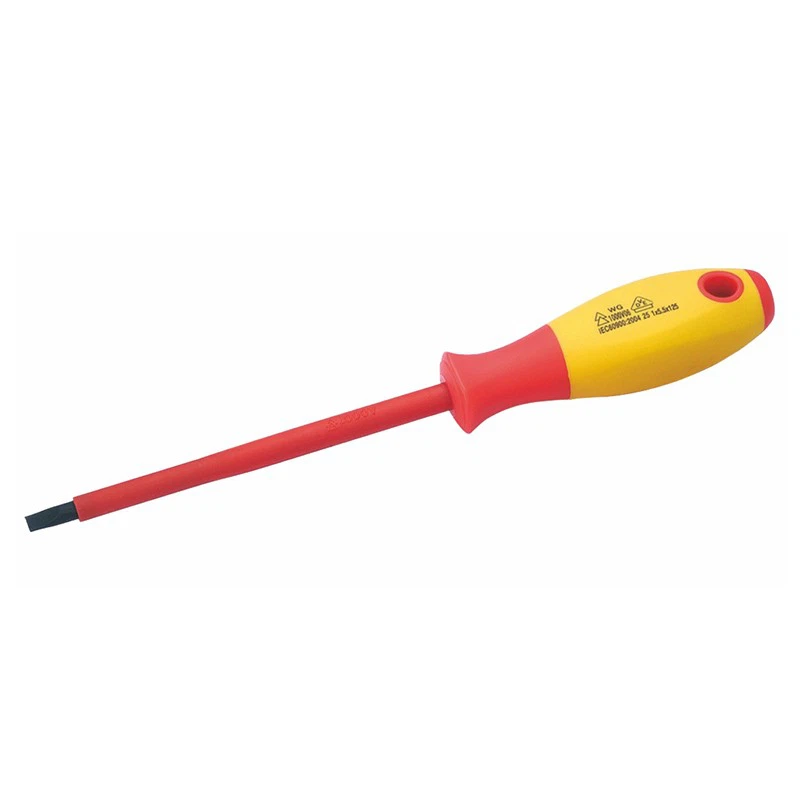
As a leading supplier of VDE slotted screwdrivers, I am often asked about how these tools ensure electrical insulation. In this blog post, I will delve into the science and technology behind the electrical insulation of VDE slotted screwdrivers, explaining the materials, manufacturing processes, and testing procedures that make them safe for use in electrical work.

Understanding VDE and Electrical Insulation
VDE, which stands for Verband der Elektrotechnik, Elektronik und Informationstechnik, is a German association that sets standards for electrical safety. VDE-certified tools, including slotted screwdrivers, are designed to provide reliable electrical insulation, protecting users from electric shocks when working on live electrical circuits. Electrical insulation is the ability of a material to resist the flow of electric current. In the context of screwdrivers, this means that the handle and shaft of the tool are coated or made from materials that prevent electricity from passing through to the user's hand.
Materials Used for Electrical Insulation
The key to the electrical insulation of VDE slotted screwdrivers lies in the materials used in their construction. The most common materials for insulation are special plastics and rubber compounds.
Insulating Plastics
High-quality insulating plastics are often used to coat the handles of VDE slotted screwdrivers. These plastics have excellent electrical insulating properties, meaning they have a high resistance to the flow of electric current. They are also durable, resistant to chemicals, and can withstand a wide range of temperatures. For example, polycarbonate is a popular choice for insulation due to its high impact resistance and good electrical insulation characteristics.
Insulating Rubber
Rubber is another material commonly used for insulation. It provides a good grip and is flexible, which can enhance user comfort. Rubber insulation is often used in combination with plastic to create a dual-layer insulation system. The rubber layer can provide an additional barrier against electrical conductivity and can also help to absorb shock and vibration during use.
Manufacturing Processes for Electrical Insulation
The manufacturing process of VDE slotted screwdrivers is crucial in ensuring proper electrical insulation.
Molding
The handle of a VDE slotted screwdriver is typically molded around the metal shaft. During the molding process, the insulating material is heated and injected into a mold that has the shape of the handle. This ensures a tight and uniform fit between the insulation and the metal shaft, leaving no gaps or weak points where electricity could potentially pass through.
Coating
In some cases, the metal shaft of the screwdriver may also be coated with an insulating material. This can provide an additional layer of protection against electrical conductivity. The coating process involves applying a thin layer of insulation to the surface of the shaft, which is then cured to ensure a strong bond.
Testing Procedures for Electrical Insulation
Before a VDE slotted screwdriver can be certified as safe for use in electrical work, it must undergo rigorous testing procedures.
Dielectric Strength Testing
One of the most important tests is the dielectric strength test. This test measures the ability of the insulation to withstand a high voltage without breaking down. The screwdriver is placed in a test setup where a high voltage is applied to the metal shaft while the handle is grounded. The voltage is gradually increased until a breakdown occurs or until the required test voltage is reached. If the insulation can withstand the test voltage without breaking down, it passes the dielectric strength test.
Leakage Current Testing
Leakage current testing is also performed to ensure that there is no significant flow of electric current through the insulation. The screwdriver is connected to a power source, and the amount of current that leaks through the insulation is measured. If the leakage current is within the acceptable limits, the screwdriver passes the leakage current test.
Benefits of Using VDE Slotted Screwdrivers
Using VDE slotted screwdrivers offers several benefits, especially in electrical work.
Safety
The primary benefit is safety. The electrical insulation provided by VDE slotted screwdrivers protects users from electric shocks, which can be life-threatening. This is particularly important when working on live electrical circuits, where even a small amount of electric current can cause serious injury.
Compliance
VDE-certified screwdrivers meet strict safety standards, which means they are compliant with industry regulations. This can be important for professionals who need to ensure that they are using tools that meet the required safety standards in their workplace.
Durability
VDE slotted screwdrivers are often made with high-quality materials and undergo rigorous testing, which means they are generally more durable than non-insulated screwdrivers. They can withstand the wear and tear of regular use in electrical work, providing a long service life.
Other VDE Screwdriver Options
In addition to VDE slotted screwdrivers, we also offer a range of other VDE-certified screwdrivers, including VDE Pozidriv Screwdrivers, VDE Precision Screwdrivers, and VDE Phillips Screwdrivers. These screwdrivers also feature the same high-quality electrical insulation and undergo the same rigorous testing procedures to ensure safety and reliability.
Contact Us for Procurement
If you are in the market for high-quality VDE slotted screwdrivers or any of our other VDE-certified screwdrivers, we encourage you to contact us for procurement. Our team of experts can help you choose the right tools for your needs and provide you with competitive pricing and excellent customer service. Whether you are a professional electrician or a DIY enthusiast, we have the tools you need to get the job done safely and efficiently.
References
- VDE Standards Handbook. Verband der Elektrotechnik, Elektronik und Informationstechnik.
- Electrical Insulation Materials: Properties and Applications. John Wiley & Sons.
- Testing and Certification of Electrical Tools. International Electrotechnical Commission.