

As a supplier of VDE Combination Pliers, I am often asked about how these versatile tools work specifically on aluminum wires. In this blog, I will delve into the details of how VDE Combination Pliers interact with aluminum wires, exploring their design features, functionality, and the advantages they offer in working with this particular material.
Understanding Aluminum Wires
Before we discuss how VDE Combination Pliers work on aluminum wires, it's important to understand the characteristics of aluminum as a conductor. Aluminum is a lightweight, ductile metal with good electrical conductivity. It is commonly used in electrical wiring, especially in high - voltage transmission lines and some residential and commercial electrical systems due to its cost - effectiveness and relatively low weight.
However, aluminum has some unique properties that require special consideration when working with it. It is more prone to oxidation than copper, which can lead to the formation of a thin oxide layer on its surface. This oxide layer has poor electrical conductivity and can increase resistance at connection points if not properly managed. Additionally, aluminum is softer than copper, which means it can be more easily deformed or damaged during handling.
Design Features of VDE Combination Pliers
VDE Combination Pliers are designed with several features that make them well - suited for working with aluminum wires.
Insulation
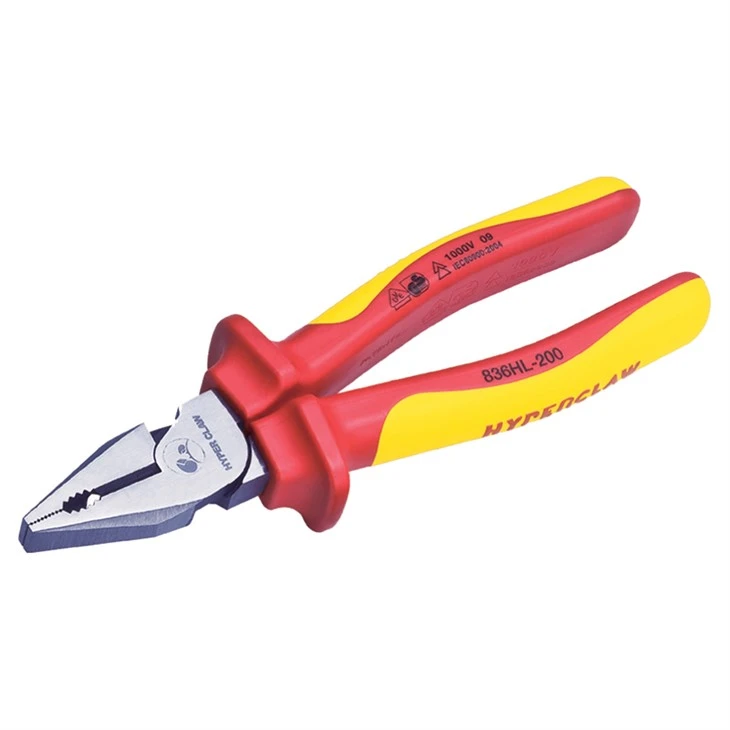
The "VDE" in VDE Combination Pliers stands for Verband der Elektrotechnik, Elektronik und Informationstechnik, a German association that sets safety standards for electrical equipment. These pliers are insulated to provide protection against electric shock when working on live electrical circuits up to a certain voltage (usually 1000V AC or 1500V DC). This insulation is crucial when handling aluminum wires in electrical systems, as it reduces the risk of electrical accidents.
Cutting Edges
The cutting edges of VDE Combination Pliers are precisely ground to provide a clean and efficient cut. When cutting aluminum wires, the sharp edges can easily penetrate the wire without causing excessive deformation. The design of the cutting edges is optimized to reduce the amount of force required for cutting, which is beneficial when working with multiple wires or thicker aluminum gauges.

Gripping Surface
The jaws of VDE Combination Pliers have a serrated or textured surface, which provides a firm grip on the aluminum wire. This grip is important for tasks such as bending, twisting, and holding the wire in place. The serrations are designed to grip the wire without biting too deeply and causing damage to the soft aluminum material.
Bend - Proof Design
VDE Combination Pliers are often constructed with a bend - proof design. This is important when working with aluminum wires, as the pliers may be subjected to significant forces during bending and shaping operations. A bend - proof design ensures that the pliers maintain their shape and functionality over time, even when used repeatedly on aluminum wires.
How VDE Combination Pliers Work on Aluminum Wires
Cutting
When using VDE Combination Pliers to cut aluminum wires, the first step is to select the appropriate cutting section of the pliers. Most combination pliers have different cutting areas for different wire sizes. Place the aluminum wire between the cutting edges at the appropriate section, making sure the wire is perpendicular to the cutting edges. Apply a steady, even pressure to the handles of the pliers. The sharp cutting edges will penetrate the wire, severing it cleanly. It's important to note that for very thick aluminum wires, it may be necessary to use additional force or multiple cuts.
Bending and Shaping
To bend an aluminum wire using VDE Combination Pliers, grip the wire firmly at the point where you want the bend to start. Use the serrated jaws of the pliers to hold the wire in place. Then, carefully apply pressure to the handles of the pliers to bend the wire to the desired angle. For more complex shapes, such as loops or curves, you may need to make multiple bends and adjust the position of the wire in the pliers. The soft nature of aluminum allows it to be easily shaped, but it's important to use a gentle touch to avoid over - bending or kinking the wire.
Holding and Twisting
VDE Combination Pliers can also be used to hold aluminum wires in place during connection or soldering. The firm grip provided by the serrated jaws ensures that the wire stays in position, reducing the risk of movement or displacement. When twisting two aluminum wires together, grip the wires at the end with the pliers and rotate the handles in a clockwise or counterclockwise direction, depending on the desired twist. The pliers help to maintain a consistent and tight twist, which is important for good electrical conductivity.
Advantages of Using VDE Combination Pliers on Aluminum Wires
Safety
The insulation provided by VDE Combination Pliers is a major advantage when working with aluminum wires in electrical systems. It protects the user from electric shock, which is especially important when dealing with live circuits. This safety feature gives users peace of mind and allows them to work more confidently.
Precision
The sharp cutting edges and textured gripping surface of VDE Combination Pliers enable precise cutting, bending, and gripping of aluminum wires. This precision is crucial for creating reliable electrical connections and ensuring the proper functioning of electrical systems. With VDE Combination Pliers, you can achieve clean cuts and accurate bends, reducing the risk of loose connections or poor conductivity.
Durability
VDE Combination Pliers are built to last. Their bend - proof design and high - quality construction materials ensure that they can withstand the rigors of repeated use on aluminum wires. This durability means that you won't have to replace the pliers frequently, saving you money in the long run.
Other VDE Pliers for Working with Aluminum Wires
In addition to VDE Combination Pliers, there are other types of VDE - insulated pliers that can be useful when working with aluminum wires.
VDE Diagonal & Hevy Duty Diagonal Cutting Pliers
These pliers are specifically designed for cutting wires. They have a sharp diagonal cutting edge that can easily cut through aluminum wires of various sizes. The heavy - duty design makes them suitable for cutting thicker wires, and their insulation provides safety when working on live circuits.
VDE Flat Nose Pliers
VDE Flat Nose Pliers are great for tasks that require precise gripping and bending. Their flat, parallel jaws allow for a large contact area on the wire, making it easier to make accurate bends and hold the wire in place. They are especially useful for creating small loops or bends in aluminum wires.
Conclusion
VDE Combination Pliers are an essential tool for anyone working with aluminum wires in electrical applications. Their design features, including insulation, sharp cutting edges, textured gripping surface, and bend - proof construction, make them well - suited for cutting, bending, shaping, and holding aluminum wires. The safety, precision, and durability they offer provide significant advantages over other types of pliers.
If you are involved in electrical work with aluminum wires and are in need of high - quality VDE Combination Pliers or other VDE - insulated pliers, I encourage you to reach out for a purchasing consultation. Let's discuss how our products can meet your specific needs and help you complete your electrical projects safely and efficiently.
References
- "Electrical Wiring Handbook" by Mike Holt.
- "Aluminum Electrical Conductor Handbook" by the Aluminum Association.